Gabe and Zack Have a Conversation Over a Smoke
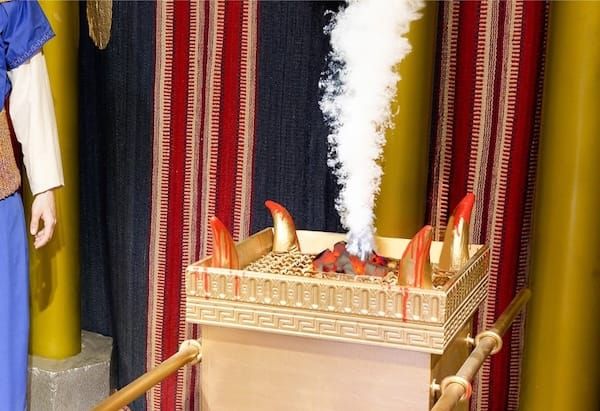
This is the Turning the Diamond Series. In this installment we will be covering Zechariah's perspective, on his journey to Jerusalem, his confrontation with Gabriel in the temple, and the naming of his son- John. We have been told since Sunday School that Zechariah didn't "believe" Gabriel's message.
However, the biblical understanding of faith goes further than believing something will happen. It can also mean trust. Zechariah also does not bring up Elizabeth's barrenness as a reason for his needing of a sign. So maybe it is about something other than the ability to have a child? Maybe it's something deeper. Enjoy
There is a saying among our prophets that lingers in the quiet, deserted corners of my soul:
“In the wilderness prepare the way for the Lord; make straight in the desert a highway for our Adonai.”
I am Zechariah — “Yah Remembers.” I remember where we came from and where we have wandered, yet I do not know where we are going.
This wilderness, dreamt by our beloved prophet Isaiah — how much more it calls to me than the trappings of our present age. Even amidst the comforts this empire brings, we are in agony. Always wondering: why cling to the ease that leads us astray, when being lost is what opens the way to being found by Adonai?
The way of the desert is to be naked, exposed, and lost. Yet to be found is the purpose of being lost. To be found is to be known. To be known by Him is to be yourself. And to be yourself is to be in shalom.
This was our experience in the desert when Adonai led us through Moses. We were in that desert after leaving the house of slavery — wandering, sometimes thirsty, sometimes hungry.
Yet always, the home of Adonai lay before our feet, something we could see- that never left our sight. This tabernacle reminded us of who we are and of Adonai who wanted to be with us.
My family, as priests, takes care of His home. We help others enter this sacred space, carrying its holiness into the world. We tend it, keep its lamps burning, and speak to Him on behalf of those not yet ready to reveal themselves fully to the divine. That is what we call sacrifice. To put it simply: “I love you.”
Since the first day this house was made— and every day since — men and women, children, Jew and non-Jew alike, enter His house seeking to be known by Him. That has been our goal: to bring everyone to Adonai, and Adonai to everyone.
Yet there are so many priests, so many voices, so many divisions — just as there are so many people in the world. Aside from all of us serving on the festivals, we each serve four days out of the year.
I have done this for many seasons. Just as others bring their shame and guilt before Adonai’s feet, I bring mine to His doorstep, even before beginning the journey.
I am an old man. My wife is not far behind me in years, and we have never had a child. In our world, that leads to superstition. This pains me, but it pains my wife, Elizabeth, even more. There have been many years of bitter tears. Now it grieves me to hear the whispers about her.
Some traditions say I should divorce her — that I am failing in His command to be fruitful and multiply. But I ask: did our father Abraham fail in his duty? Did he not teach us to love? Would he prefer us to make widows rather than preserve the dignity of a woman?
Elizabeth is more righteous than I, loving and compassionate. Even when those around us whisper about her — disregarding what she says and looking instead to me — even when I remain silent, allowing her to speak freely, affirming her words by my restraint — still, people look to me for answers. And yet, she continues to speak of love. She lets the Spirit flow through her, even in the face of doubt and disregard.
Every time, it pains me to leave her, yet I look forward to attending to Adonai’s house and caring for all the guests who will come. I make the four-day journey.
My joints ache; the pain grows worse with each passing year. Singing, eating, reflecting, walking — each step reminds me of both my age and my devotion.
We enter this temple, built by Herod — a structure completed only five years ago, yet still under constant development. Herod is a wicked man — killing wives, sons, and the innocent for power, like the kings of old. A man far removed from the wisdom of Bezalel, who built the Tabernacle.
Some might say worse than Herod are the priests who are always working the temple system, unlike us who serve in rotation. They are the sons of Zadok — also known as the Sadducees — holding the high priesthood while gaining wealth for themselves, partners with Herod, with the empire of Rome, with Caesar, who seeks to make himself divine. Ideas counter to the one who gave the divine breath to all people.
This temple has become a den of robbers. The sons of Zadok even killed the beloved prophet Zechariah. Should any threat arise, Herod, Rome, and the sons of Zadok would silence it.
For hundreds of years, the voices of the prophets have been quiet. Tyranny seems to reign. Yet we serve beneath the foot of evil, and still Adonai is never apart from us. That is what we learned in the desert. Will we find ourselves? Will we repent?
So, we enter the temple this day, ready to divide the work. Some may ask: with all the sin surrounding this place, can Adonai be here? Can Adonai dwell among sin? Perhaps He would rather people turn. I know are the commands I learned as a boy — one of which is the offering of incense, an offering of His presence, a sign that He is always here.
Because of His presence, superstition surrounds it- This offering is made daily, by a different priest each time.
Some say the one who makes this offering is forgiven of hidden sins. Some say this offering it brings great wealth. It is a great honor, an honor that has passed me by.
We gather in our circle, each of us holding out one or two fingers. The priest in charge calls out a number and begins counting each finger around the circle.
Whoever’s finger is counted last is the one chosen. I have stood in this circle dozens of times, wondering what will happen today. I have seen men both older and younger than I chosen before me.
A collective gasp rises from the circle. The priest looks at me and says, “You were the last one. You will make the offering.”
“Me? After all these years?” I ask. No one answers. I am whisked away, instructed on all the preparations. I am in shock. Why now? I wonder to myself.
It all rushes past in a blur. All I remember is being alone in the Holy Place. I step forward, ready to offer up this offering of presence.
I enter — and I am alone in the sanctuary. Everyone outside is praying, knowing each step of the ritual. I have been in the holy place before, always in awe.\
I take a moment, I gather myself and I prepare the mixture — this blend that symbolizes sinners and the righteous together — a beautiful, pleasing aroma for Adonai. I throw in the mixture and I say:
“Blessed are You, Lord our Adonai, King of the Universe,
who has sanctified us with His commandments
and commanded us concerning the incense offering.”
When the smoke starts to rise, I know it is time to leave, lest I become like Nadab and Abihu who died for their incorrect worship.
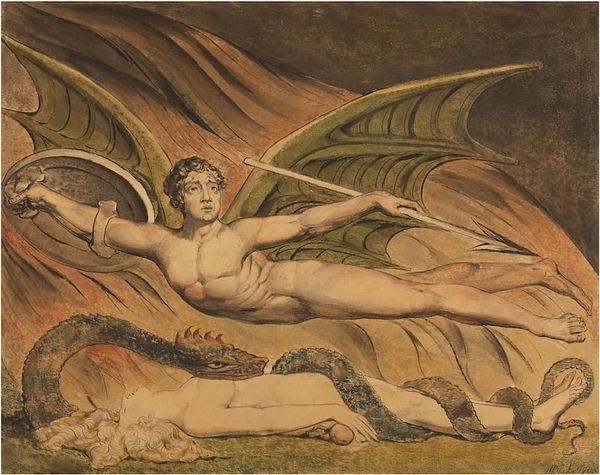
As I am finishing putting in the mixture, I look up, and I am in shock. There is a man.
Only I should be here… My heart froze — was I to die?
The man spoke:
“Do not be afraid, Zechariah; your prayer has been heard. Your wife Elizabeth will bear you a son, and you are to call him John. He will bring you joy and delight, and many will rejoice at his birth. He will be great in the sight of the Lord.
He shall not drink wine or any fermented drink, and he will be filled with the Holy Spirit, even before his birth. He will bring back many of the people of Israel to the Lord their Adonai.
In the spirit and power of Elijah, he will turn the hearts of the parents to their children, and the disobedient to the wisdom of the righteous, to prepare a people ready for the Lord.”
The man stood there as I processed this. I am to have a son? My wife and I will be overjoyed, yet that joy fades. I recognized some of his words — his words were from the last prophet to speak, from Malachi — the very last of his message. This man also said he would have the spirit of the prophet Elijah. Does this mean he will be a prophet? I’m overwhelmed by such a proclamation.
Yet this joy is accompanied by deep sadness.
I recall the prophet of my own name, Zechariah, from the book of Chronicles:
“Then the Spirit of Adonai came on Zechariah son of Jehoiada the priest. He stood before the people and said, ‘This is what Adonai says: “Why do you disobey the Lord’s commands? You will not prosper. Because you have forsaken the Lord, he has forsaken you.”’
But they plotted against him, and by order of the king they stoned him to death in the courtyard of the Lord’s temple. King Joash did not remember the kindness Zechariah’s father Jehoiada had shown him, but killed his son, who said as he lay dying, ‘May the Lord see this and call you to account.’”
He was stoned to death in this temple. Can any prophet die outside Jerusalem? If he brings a prophetic message — condemning or even giving hope — this will challenge the sons of Zadok, Rome, and Herod. I am an old man. Is Adonai condemning my son to death? I will not be there to protect or teach him. Will I have such a short time with him? What about my wife? How long will she have with him?
I asked, “How can I be sure of this? I am an old man, and my wife is advanced in years.”
The angel replied:
“I am Gabriel. I stand in the presence of Adonai and have been sent to bring you this good news. But because you did not believe my words, you will be silent until the day these things come to pass.”
I came out, trying to tell the others what had happened — but no sound came. I knew this was from Adonai. Adonai has a plan for the son I will have. I went home and knew my wife, and she became pregnant. I was faithful to what the Lord had said. He also was faithful.
I saw how much joy Elizabeth had, and for a while, that lifted my heart. I could not match this joy. For I know the fate of every prophet — almost as if Adonai asked me to take the place of Abraham — to John as Isaac. Yet, Herod, the sons of Zadok, and Rome will hold the knife ready to kill whoever is in the way.
John — an ironic name, meaning “Yah is merciful.” In that silence, I reflected on the meaning of his name. Mercy. That would be his guiding identity. For months, I reflected, wrestling through the calling he was to be given.
Adonai sent this boy to redeem Israel, to take them back into connection with Adonai as His people — in His home, in every home, in the desert, everywhere. This is mercy: to be with us at our weakest, to see us, and to give us a son — to give us hope.
Eventually, the birth came. Elizabeth said, “He shall be called John.” Others tried to dissuade her. They handed me a tablet, and I wrote:
“Yah is merciful.” — Yochanon. John.
And at last, my tongue was freed. I praised Adonai — and I will cherish my son.
Author’s Note
According to Church tradition, later when Herod sought to kill every boy under the age of two, John was targeted. Zechariah, serving in the temple, refused to reveal his son’s location and was ultimately murdered in the temple. He trusted the Lord to protect his son and prepare him for his divine mission in the desert.